Need help? Ask an expert your product and motorbike gloves questions
Need help? Ask an expert your product and motorbike gloves questions
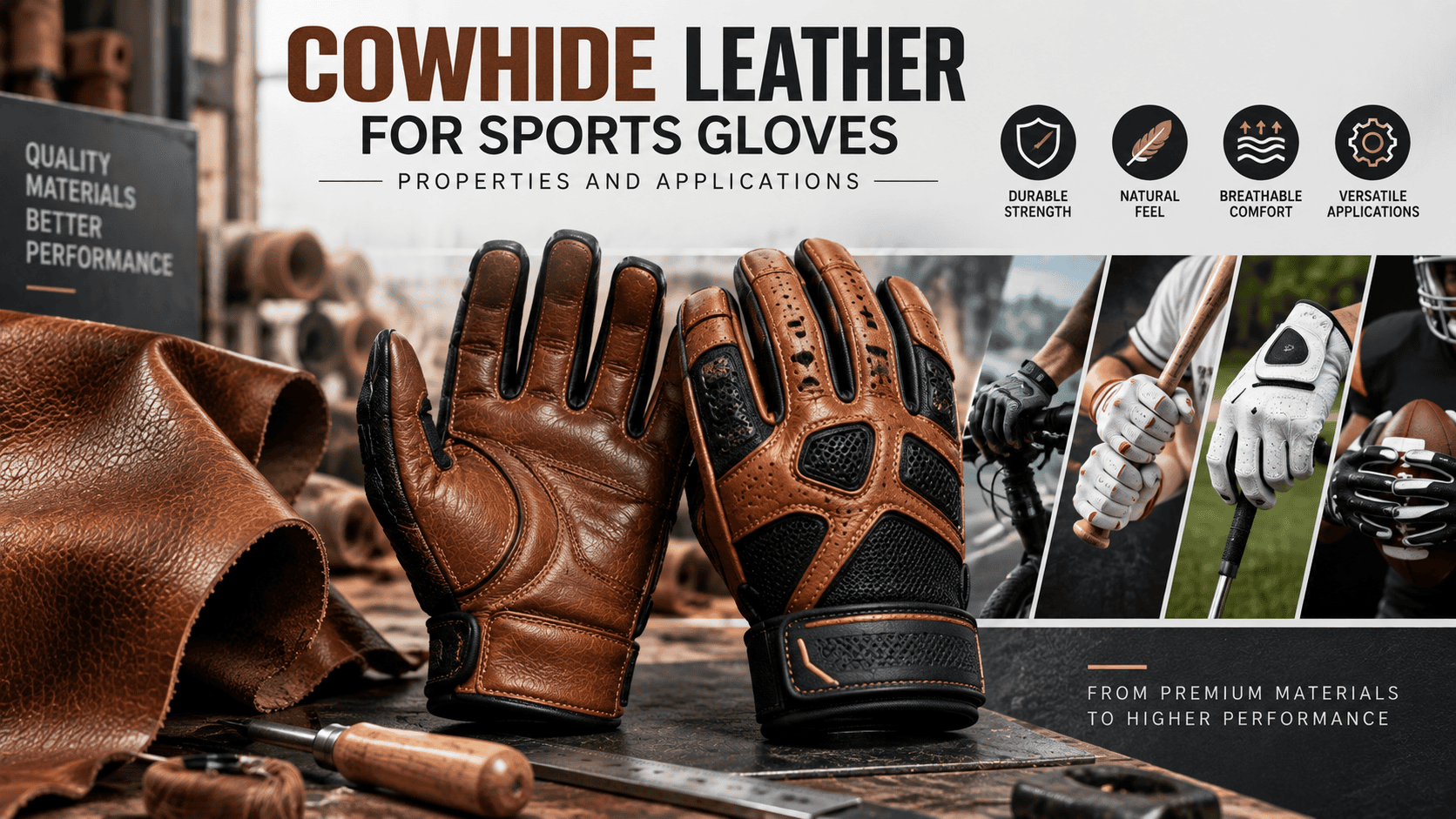
Cowhide leather can be a useful material for sports gloves when a brand needs a balance of natural material feel, structural strength, abrasion resistance, and premium appearance. However, the suitability of cowhide depends on the sport, leather specification, glove construction, and intended use.
For B2B buyers, the important question is not simply whether cowhide is “good” for sports gloves. The better question is which cowhide specification and construction are appropriate for the particular glove application.
Cowhide leather is leather produced from cattle hide. The finished material can vary considerably depending on how the hide is processed, finished, and constructed.
For sports-glove manufacturing, buyers should therefore avoid specifying only “cowhide leather.” A more useful material specification can include:
The leather specification should be evaluated together with the glove pattern, stitching, padding, lining, closures, and other materials.
Cowhide is associated with durable leather glove construction and can provide useful resistance to everyday mechanical stresses. OSHA identifies leather gloves as suitable for certain hazards involving abrasions, blows, rough objects, sparks, and moderate heat, while also emphasizing that glove selection must match the specific hazard.
That does not mean every cowhide sports glove provides a particular level of protection. Performance depends on the complete product design and should be verified for the intended application.
For sports gloves, cowhide can be considered when the product requires:
Abrasion is an important consideration in gloves because repeated contact with equipment, surfaces, or other materials can gradually wear the glove.
Leather is widely used in glove applications where abrasion and contact with rough surfaces are concerns. OSHA specifically identifies leather among materials used for protection against cuts, abrasions, blows, and rough objects.
The actual abrasion performance of a sports glove depends on leather quality, thickness, finishing, stitching, reinforcement, and where the material is positioned.
Cowhide provides a natural leather feel that can contribute to the tactile character of a glove.
For brands positioning a product around traditional leather construction, this characteristic can be an important part of the product experience.
However, thicker leather may affect flexibility and dexterity. Material thickness should therefore be selected according to the intended sport rather than simply maximizing thickness.
Cowhide can provide a relatively substantial material structure compared with lightweight textile constructions.
This can be useful for glove areas that require greater material stability. At the same time, excessive stiffness can negatively affect comfort and hand movement.
A successful glove design balances material strength with flexibility.
Natural leather provides a distinctive surface appearance. Grain, finish, color, and processing can all affect the final visual character of the glove.
For private-label brands, this can support a premium visual identity, particularly when leather appearance is an important part of the product concept.
Natural leather is not manufactured as a perfectly uniform sheet. Variations can occur between hides and within individual hides.
For large B2B orders, buyers should discuss acceptable variations with the manufacturer during product development.
Cowhide should not automatically be treated as superior to synthetic leather, textile, or other materials.
Each material solves different product requirements.
| Factor | Cowhide Leather | Synthetic Leather | Textile |
|---|---|---|---|
| Natural feel | High | Varies | Generally different |
| Surface consistency | Natural variation | Usually more uniform | Usually uniform |
| Abrasion potential | Can be strong depending on specification | Varies by construction | Varies by fabric |
| Flexibility | Depends on thickness and finish | Can be engineered for flexibility | Often highly flexible |
| Breathability | Depends on leather and construction | Depends on material | Often strong |
| Branding options | Depends on finish and treatment | Often flexible | Highly design-dependent |
| Premium positioning | Commonly associated with leather products | Can range from value to premium | Depends on construction |
| Maintenance | Requires appropriate leather care | Often easier to maintain | Depends on textile |
| Best choice | When leather characteristics are required | When consistency/design/cost are priorities | When lightweight or breathable construction is important |
The table illustrates why material selection should begin with the product requirements rather than with a predetermined assumption about which material is best.
Cowhide can be considered for different sports-glove concepts, but the appropriate construction depends on the sport.
Cycling gloves typically require a combination of grip, flexibility, ventilation, padding, and comfort.
Cowhide may be considered for a leather-focused cycling glove concept, but lightweight synthetic materials or technical textiles may be more appropriate when ventilation, low weight, or specific grip constructions are priorities.
Solehre’s current product catalog includes multiple cycling-glove constructions using materials such as synthetic leather, PU wet-grip materials, Lycra mesh, gel foam, and other technical components.
This illustrates an important sourcing principle: the material should follow the glove’s intended function.
Batting gloves require a close-fitting construction with appropriate grip, flexibility, and hand feel.
Cowhide may be considered for a leather-focused product, but the leather thickness and panel placement need to be compatible with the required hand movement.
For a baseball or softball brand, the manufacturer should evaluate the complete palm, finger, backhand, closure, and reinforcement construction rather than selecting leather independently.
Golf gloves place particular importance on tactile feel, fit, flexibility, and grip.
A cowhide construction may suit a particular premium product concept, but the leather specification must be selected carefully because excessive thickness or stiffness could interfere with the dexterity required by the sport.
Cowhide may also be considered for selected sports or lifestyle glove designs where the product concept calls for a substantial leather construction.
The suitability should be determined through product development and sampling rather than assumed from the material alone.
Thickness is one of the most important specifications when developing a leather sports glove.
A thicker leather can provide more material substance, but it may also reduce flexibility and increase weight.
A thinner leather can provide greater flexibility and tactile sensitivity, but may require additional reinforcement depending on the application.
The appropriate thickness therefore depends on:
Instead of requesting “thick cowhide,” a B2B buyer should communicate the intended application and allow the manufacturer to recommend a suitable construction for sampling and evaluation.
Cowhide can be processed into different forms, including grain and split leather.
Grain leather retains the outer portion of the hide and can provide a particular surface character and material structure.
Split leather is produced from the lower layers of the hide after separation from the grain portion. Its characteristics depend on processing and finishing.
The choice between them should be based on the required appearance, feel, construction, cost, and intended use.
Buyers should request the exact leather specification from the manufacturer rather than treating all cowhide as identical.
Leather is only one component of a finished sports glove.
A properly developed glove may also involve:
For example, a brand could use cowhide in selected areas while using a stretch textile in areas requiring additional flexibility.
This type of hybrid construction can help balance durability, comfort, weight, and movement.
Cowhide can offer several useful characteristics for appropriate sports-glove applications:
Suitable when tactile leather characteristics are part of the product concept.
Leather is widely used in glove applications where abrasion and rough contact are considerations.
Natural leather can support a traditional or premium visual identity.
Appropriately specified leather can provide useful material structure in selected glove areas.
Different leather finishes, colors, panel layouts, and construction methods can create different product appearances.
Cowhide is not automatically the right choice for every sports glove.
A heavier leather construction may not be suitable for sports where minimum weight is important.
Leather thickness and finishing can affect flexibility and dexterity.
Leather requires material-appropriate care and handling. Buyers should establish cleaning, drying, and storage requirements for the specific leather construction.
Natural hides can have variations in grain, texture, and appearance.
The leather specification, grade, construction, and finishing process can influence the overall product cost.
For these reasons, material selection should be evaluated against the complete product brief.
For a B2B buyer developing a new product, use a structured process.
Start with the exact application.
A cycling glove should not be specified in the same way as a batting, golf, or other sports glove.
Identify whether the glove requires:
This helps determine where leather should be used and how thick it should be.
Discuss:
Avoid treating “cowhide” as a complete technical specification.
A glove does not necessarily need to be made entirely from cowhide.
Leather can be combined with technical textiles, mesh, elastic, foam, or synthetic materials where the design requires different properties.
A physical sample allows the buyer to assess:
For custom products, sampling is especially important before bulk production.
For a sports brand developing a private-label or OEM glove collection, the material decision should be included in the product-development brief.
The manufacturer should receive enough information to understand:
Solehre Brothers Industries states that it provides sports-glove manufacturing and supports OEM, ODM, private-label, and customized product development. Its website also describes controlled manufacturing and quality-management processes.
For buyers evaluating a manufacturing partner, Solehre’s current product catalog provides examples of different sports-glove constructions, including custom cycling gloves with PU wet-grip materials, gel foam, Lycra mesh, and anatomical-fit designs.
The important point is that the manufacturer should select or develop the construction according to the product brief rather than applying one material specification to every sports glove.
Before approving bulk production, buyers should review more than the leather surface.
Important checks can include:
If a glove is intended for a specific safety or protective application, the relevant performance requirements and applicable standards should also be verified.
OSHA emphasizes that glove selection should be based on the specific hazard and that no single material protects against every hazard.
There is no universal winner.
Cowhide may be appropriate when a brand prioritizes natural leather feel, traditional appearance, structural characteristics, and a leather-focused product position.
Synthetic materials may be more suitable when the priority is consistent surface appearance, specific lightweight construction, design flexibility, or cost control.
The correct choice depends on the product specification.
For B2B buyers, the most useful comparison is therefore not simply leather vs synthetic. It is:
Which material and construction provide the required characteristics for this specific sports glove?
Cowhide can be suitable for selected sports-glove applications where its material characteristics match the product requirements. The appropriate leather specification depends on the sport, required flexibility, contact conditions, construction, and target product positioning.
Cowhide can provide useful durability characteristics, particularly in applications involving abrasion and rough contact. However, finished-glove durability depends on leather specification, thickness, stitching, reinforcement, construction, and use conditions.
Not universally. Cowhide and synthetic materials have different characteristics. The appropriate choice depends on the sport, required feel, flexibility, appearance, maintenance, cost, and intended use.
Not necessarily. Increasing thickness can provide more material substance but may also affect flexibility, weight, and dexterity. The correct thickness should be selected according to the glove’s intended application.
Yes. A hybrid construction can use different materials in different areas of a glove. This can help balance flexibility, durability, comfort, weight, and design requirements.
Ask for the exact leather specification, thickness, construction, available finishes, sample-development process, customization options, quality-control procedures, and applicable testing or compliance information.
Yes, where the manufacturer’s capabilities support the requested product. Solehre states that it provides OEM, ODM, private-label, and customized sports-glove manufacturing services.
Cowhide leather can be a valuable material option for sports gloves when the product requires a natural leather feel, appropriate abrasion resistance, structural characteristics, and a leather-focused appearance.
However, the material should never be selected in isolation.
For a successful sports-glove development project, buyers should define the sport, intended use, hand movement, material specification, thickness, construction, branding, and target market before approving production.
For brands sourcing custom sports gloves, Solehre Brothers Industries provides OEM, ODM, private-label, and customized manufacturing services. Its current catalog demonstrates that sports gloves can use different material and construction approaches depending on the intended application.

