Need help? Ask an expert your product and motorbike gloves questions
Need help? Ask an expert your product and motorbike gloves questions
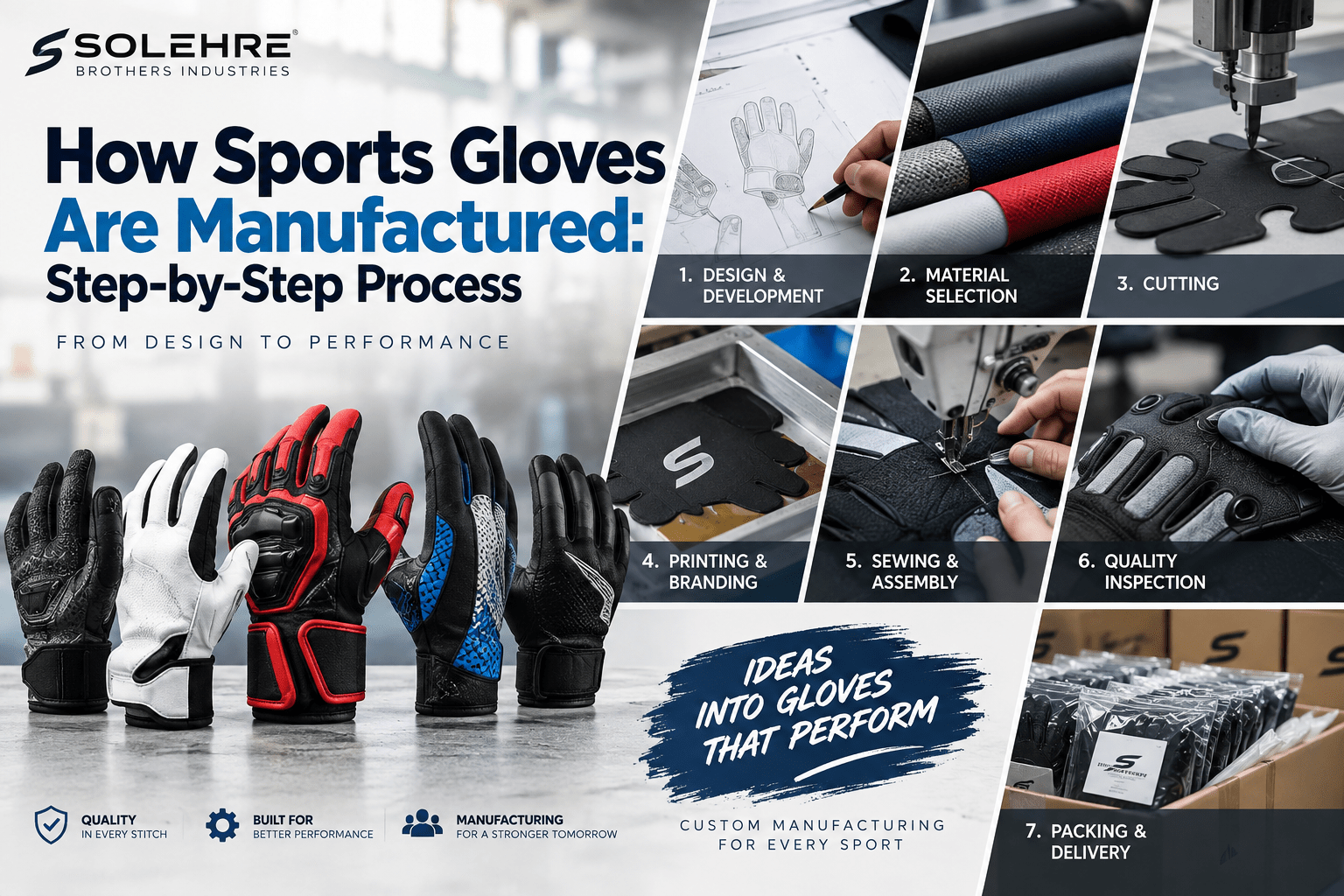
Sports gloves are made through a sequence of design, material selection, pattern development, cutting, assembly, and quality-control steps. The exact process depends on the sport: goalkeeper gloves, boxing gloves, cycling gloves, and training gloves have different construction requirements.
For a brand sourcing sports gloves, the important question is not only how gloves are made, but also how the manufacturing process affects fit, grip, protection, comfort, branding, and production consistency.
A manufacturer needs more than a glove image to produce a consistent product. The intended sport, hand fit, materials, construction, and branding requirements all affect the design.
For a wholesale or private-label order, buyers should establish:
These decisions should be settled before production begins because changing a pattern, material, or construction detail later can affect the finished glove.
The process begins with a product brief, reference sample, or design concept. The manufacturer identifies the intended use and develops the glove around its functional requirements.
For example, a cycling glove may prioritize flexibility and grip, while a training glove may require a different balance of comfort and protection. Solehre describes its R&D work as focused on developing and refining sports gloves through feedback, material selection, and product improvement.
A glove pattern defines the shape and dimensions of each component. The manufacturer develops the pattern around the intended fit, then checks how the pieces will join together.
Important considerations include:
A good pattern is not simply a smaller or larger version of the same design. Each size must maintain the intended fit and construction.
Materials are selected according to the glove’s intended use, not only its appearance. Different sports may require different combinations of flexibility, grip, comfort, and protection.
Common material considerations include:
| Material consideration | Why it matters |
|---|---|
| Outer fabric or leather | Affects feel, appearance, flexibility, and durability |
| Palm material | Influences grip, contact feel, and wear resistance |
| Padding or reinforcement | Adds structure or protection where required |
| Lining | Can improve comfort and ease of wearing |
| Closure material | Helps secure the glove and support fit |
| Thread and stitching | Affect seam strength and construction consistency |
The correct choice depends on the product specification. A material suitable for a lightweight cycling glove may not be appropriate for a glove designed for a different sport.
Once the pattern and materials are approved, the components are cut into the required shapes. Accurate cutting is important because even small differences can affect fit and assembly.
Solehre identifies cutting as a dedicated production stage, using techniques intended to achieve accurate patterns and consistent components.
Branding may be applied before or during assembly, depending on the design and printing method.
Common options include:
The method should match the material and the required appearance. Solehre’s printing department lists screen printing, heat transfer, and sublimation among its sports-glove customization methods.
The cut components are joined through stitching and other construction methods. This is where the glove begins to take its final shape.
Assembly must account for the intended fit, finger movement, seam placement, and overall construction. Poorly aligned components can create discomfort or inconsistent sizing.
Solehre describes sewing as a dedicated stage focused on assembling glove components through stitching techniques that support fit and construction quality.
After assembly, the gloves are checked for defects and finished according to the product specification.
Quality checks may include:
Solehre states that its quality process includes inspections and testing across production stages, with a focus on consistency and customer requirements.
The finished gloves are prepared for delivery according to the agreed packaging requirements. Packaging may include individual packaging, labels, cartons, or other buyer-specified presentation details.
Solehre identifies packing as a separate production stage intended to protect products during delivery and maintain their presentation.
Sports gloves are not interchangeable products. The construction, materials, and features should be evaluated against the sport and the intended use.
| Glove type | Main manufacturing considerations |
|---|---|
| Cycling gloves | Hand position, flexibility, grip, comfort, and palm construction |
| Football training gloves | Fit, flexibility, grip, and sport-specific design requirements |
| American football gloves | Palm and back-of-hand construction, fit, and intended use |
| Batting gloves | Hand feel, grip, fit, and construction suited to batting |
| Golf gloves | Fit, flexibility, grip, and material selection |
| Running gloves | Lightweight construction, comfort, and intended weather or training use |
These are general manufacturing considerations, not guarantees that every glove type uses the same materials or features. The final specification should be confirmed for the particular product.
A brand developing a custom glove should provide a clear specification before sampling.
Define the glove’s intended use, preferred fit, size range, and any reference samples. If the design is based on an existing glove, the manufacturer should confirm which details can be reproduced or adapted.
Specify the preferred materials, palm treatment, padding, closures, lining, and other required features. Where the buyer is unsure, the manufacturer can help identify suitable options based on the product’s intended use.
Provide logo files, colors, placement requirements, labels, and packaging preferences. These details should be agreed before production so that the final product matches the approved design.
A sample should be reviewed before bulk production. The buyer should check fit, appearance, construction, and the features that matter most for the intended sport.
The manufacturing route depends on how much of the product the buyer wants to control.
| Manufacturing route | Best suited for |
|---|---|
| OEM | Brands that have their own specifications, designs, or reference samples |
| ODM | Brands that want a manufacturer to develop a product around their requirements |
| Private label | Brands that want to sell an existing or adapted product under their own branding |
| Custom manufacturing | Buyers who need specific materials, features, colors, or construction details |
Solehre offers OEM, ODM, private-label, and customization services for sports gloves. Its website explains that buyers can share designs or samples and work with the manufacturer on suitable materials and manufacturing solutions.
Before placing an order, compare manufacturers on more than price. A suitable supplier should be able to explain how the product will be developed, sampled, manufactured, inspected, and prepared for delivery.
Useful questions include:
Solehre Brothers Industries presents itself as an OEM, ODM, and private-label sports gloves manufacturer serving international B2B buyers. Its website also provides dedicated manufacturing, R&D, cutting, printing, sewing, quality, and packing information.
For a brand looking to develop or source sports gloves, the most relevant starting point is Solehre’s custom gloves manufacturing services . The site covers OEM, ODM, private-label, and customization options, along with its sports glove manufacturing process.
For specific product exploration, buyers can review the American football gloves and Rugby gloves pages, or browse the Half-finger cycling gloves and accessories category. These are relevant destinations for different sports-glove applications, rather than substitutes for a custom manufacturing specification.
The production timeline depends on the design, materials, sampling requirements, order specifications, and production schedule. A manufacturer should confirm the timeline for the specific project rather than relying on a generic estimate.
Materials vary by sport and product design. Common considerations include the outer material, palm material, padding, lining, closures, and stitching. The most suitable combination depends on the glove’s intended use.
Yes. Custom branding may include printed logos, colors, labels, and other design details. The available method depends on the material and the approved product specification.
OEM manufacturing generally follows the buyer’s own specifications or design, while ODM manufacturing involves developing a product around the buyer’s requirements using the manufacturer’s design and development capabilities.
Sampling allows the buyer to review the actual product before committing to a larger order. It helps confirm fit, materials, construction, branding, and other important requirements.
Choose a manufacturer that can support the required glove type, explain its production process, provide relevant sampling and quality information, and agree clearly on the product specification and order requirements.
A basic design may be adapted, but different sports often require different materials, construction, and features. A glove should be developed around the intended use rather than assuming one design will suit every application.
Sports gloves are manufactured through a structured process that begins with product requirements and continues through pattern development, material selection, cutting, branding, sewing, inspection, and packing. For B2B buyers, the quality of the final product depends on how clearly the specification is defined and how carefully each stage is controlled.
If you are developing a new sports glove line or sourcing custom-branded products, the next step is to share your intended sport, design requirements, and branding needs with a suitable manufacturer.

