Need help? Ask an expert your product and motorbike gloves questions
Need help? Ask an expert your product and motorbike gloves questions
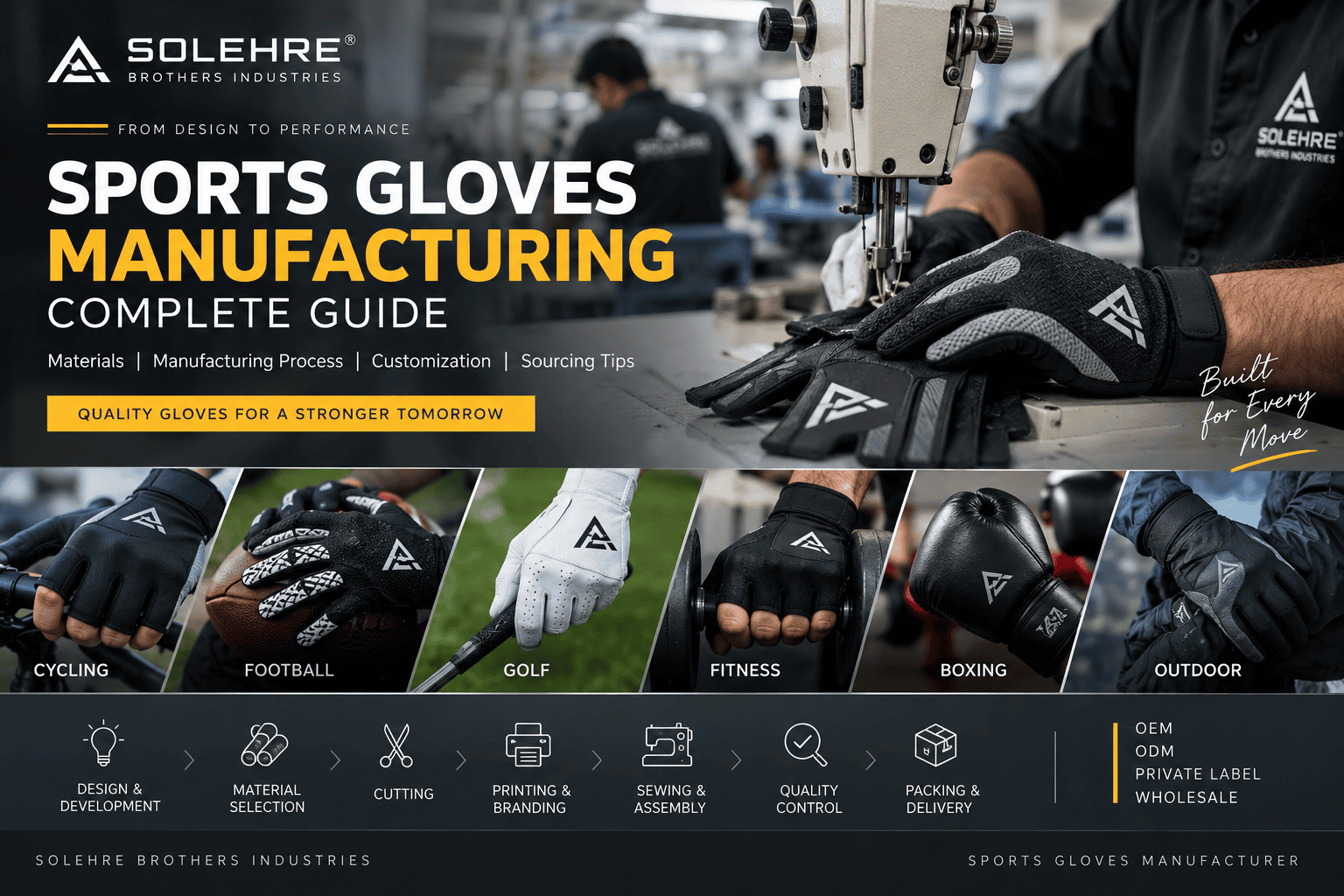
Sports gloves manufacturing is the process of developing, producing, and finishing gloves for specific sporting activities. For a brand or wholesale buyer, the right manufacturing partner must be able to match the product to its intended use, develop the required specifications, and provide a reliable route from design to finished goods.
The most important decision is which type of glove you need and how much customization it requires. Cycling, football, golf, boxing, and other sports have different requirements for grip, flexibility, fit, and protection. A suitable manufacturer should help you define those requirements before production begins.
Sports gloves manufacturing combines product design, material selection, pattern development, cutting, stitching, printing, quality checks, and packing. The exact process depends on the sport and the glove design.
For B2B buyers, the process is not simply about ordering a finished product. It may involve choosing an existing design, adapting a sample, or developing a new product under a brand’s specifications.
Solehre Brothers Industries is a Sialkot-based sports gloves manufacturer offering OEM, ODM, and private-label manufacturing for brands, wholesalers, distributors, and importers. Its stated product range includes cycling, fitness, running, outdoor, and other sports gloves.
Different sports require different glove designs. A buyer should begin with the intended activity rather than selecting a glove only by appearance.
| Sports glove type | Main considerations |
|---|---|
| Cycling gloves | Grip, flexibility, comfort, and the intended riding style |
| Football gloves | Sport-specific fit, grip requirements, and design specifications |
| Golf gloves | Fit, dexterity, and the requirements of the intended use |
| Fitness gloves | Comfort, flexibility, and the activities they are designed for |
| Running gloves | Lightweight construction, comfort, and weather-related requirements |
| Outdoor gloves | Intended conditions, materials, and functional requirements |
| Rugby gloves | Sport-specific design, fit, and grip requirements |
| American football gloves | Intended use, fit, and product specifications |
| Batting gloves | Intended use, fit, and design requirements |
These categories are represented in Solehre’s published catalog, although the available range and specifications should be confirmed for each project.
The right material depends on the glove’s purpose. A material that works well for one sport may not be suitable for another. Buyers should ask the manufacturer to recommend materials based on the required fit, flexibility, grip, comfort, and intended use.
Important areas to evaluate include:
Solehre describes its manufacturing process as including R&D, cutting, printing, sewing, quality assurance, and packing. Its quality page also states that it uses an ISO 9001:2015 certified Quality Management System.
A typical manufacturing project moves through several stages. The exact sequence and requirements depend on the product.
1. Product requirements and development
The buyer provides a design, sample, or product requirements. The manufacturer uses these details to understand the intended product and customization needs.
2. Pattern development and cutting
Materials are prepared and cut according to the required patterns. Solehre identifies cutting as a dedicated stage in its manufacturing process.
3. Printing and branding
Designs, logos, and graphics can be applied according to the approved customization. Solehre lists screen printing, heat transfer, and sublimation among its printing techniques.
4. Sewing and assembly
The cut components are assembled using appropriate stitching and construction methods.
5. Quality assurance and packing
The finished gloves are inspected and prepared for delivery. Buyers should agree on the quality requirements and packaging details for their order.
Solehre publishes these stages as part of its technical journey and manufacturing facilities.
The main difference is who provides the product design and how much the buyer wants to customize it.
| Manufacturing route | What it means | Suitable for |
|---|---|---|
| OEM | The buyer provides product specifications, a design, or a sample for manufacturing. | Brands with an established product concept |
| ODM | The manufacturer develops a product according to the buyer’s requirements. | Brands that need design and development support |
| Private label | A product is manufactured for sale under the buyer’s brand. | Retailers, importers, and brands building their own label |
| Custom manufacturing | The product is adapted or developed around the buyer’s specific requirements. | Buyers who need changes to an existing design or a new product |
Solehre describes OEM, ODM, and private-label manufacturing as services for brands and wholesale buyers. The exact scope of customization should be confirmed for each project.
These are general sourcing distinctions. The best route depends on the actual product and the manufacturer’s available capabilities.
A good inquiry should provide enough information for the manufacturer to understand the product and prepare an accurate response.
Include:
Ask the manufacturer:
Solehre’s contact page provides a sample-request and catalog-request process, making it a relevant starting point for buyers who want to discuss a project.
A suitable manufacturer should be evaluated on more than product appearance or price. The buyer should look for a clear match between the manufacturer’s capabilities and the product requirements.
A manufacturer should have experience with the type of glove being sourced. A cycling glove project, for example, should be evaluated differently from a boxing or football glove project.
For custom products, the ability to discuss requirements, develop samples, and refine the design is important. Solehre states that its R&D team works on product development and improvements in grip, flexibility, and comfort.
Buyers should ask how materials, construction, and finished products are checked. Solehre states that its quality management system is ISO 9001:2015 certified.
The manufacturer should be able to explain how the product will be cut, printed, sewn, inspected, and packed. Solehre lists these as dedicated manufacturing stages.
A reliable sourcing process requires clear specifications, agreed expectations, and a documented understanding of the product. This is especially important when the buyer is developing a custom or private-label line.
Price is important, but it should not be the only comparison point.
| Factor | What to compare |
|---|---|
| Product suitability | Does the manufacturer produce the type of glove you need? |
| Customization | Can the design, materials, colors, and branding be adapted? |
| Development support | Can the manufacturer work from your specifications or sample? |
| Quality process | What inspections and quality controls are used? |
| Communication | Are requirements and expectations clearly understood? |
| Packaging | Can packaging be discussed and agreed for the order? |
| Commercial terms | What are the quotation, quantity, and delivery terms? |
The goal is to choose a manufacturing partner that can meet the actual product requirements, not simply the lowest quoted price.
For buyers exploring sports gloves manufacturing, Solehre’s published website provides several relevant destinations:
The published website also lists additional glove categories, including batting, bowling, golf, cycling, handball, and football training gloves. Buyers should confirm the current availability and specifications of the category they need.
Sports gloves manufacturing is the process of developing and producing gloves for specific sporting activities. It includes product development, material preparation, cutting, stitching, finishing, quality checks, and packing.
Yes, custom sports gloves can be developed according to a buyer’s requirements, design, or sample. The exact customization options depend on the manufacturer and product.
OEM generally involves manufacturing to the buyer’s specifications, while ODM involves developing a product around the buyer’s requirements. The exact scope of each service should be confirmed with the manufacturer.
Include the sport, glove type, design or sample, materials, colors, size range, branding requirements, quantity, and delivery destination. These details help the manufacturer understand the project.
Choose the material according to the intended sport, fit, flexibility, grip, comfort, and product requirements. A manufacturer should help evaluate suitable options rather than recommending a material without considering the use case.
Ask how the manufacturer checks materials, stitching, construction, finishing, and the finished product. The specific checks should match the product’s intended use and agreed specifications.
Solehre states that it provides R&D and customization support for sports gloves. Buyers should contact the company to confirm the development options available for their specific product.
The best sports gloves manufacturing decision starts with a clear understanding of the product, its intended use, and the level of customization required. Buyers should compare manufacturers based on relevant experience, development support, quality processes, and their ability to meet the agreed specifications.
For brands and wholesale buyers exploring OEM, ODM, or private-label sports gloves, Solehre Brothers Industries is a relevant manufacturer to contact for a product discussion, sample request, or catalog inquiry.

