Need help? Ask an expert your product and motorbike gloves questions
Need help? Ask an expert your product and motorbike gloves questions
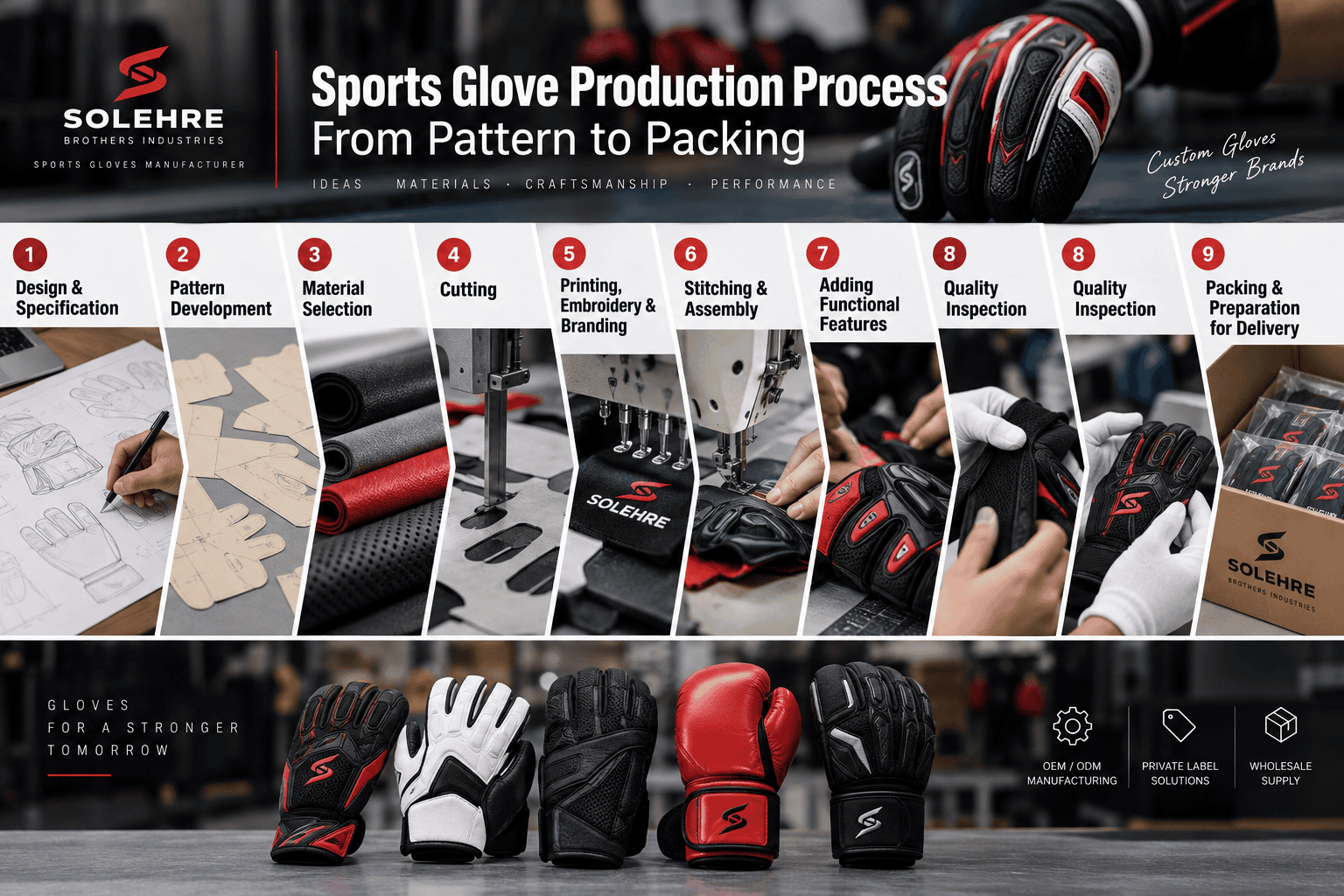
The sports glove production process turns a product design into a finished glove through a series of decisions about materials, construction, fit, quality, and packaging. For a brand or wholesale buyer, understanding these stages helps clarify what to specify, what to approve before production, and what to verify before placing an order.
This guide explains the process from pattern development to packing, with a focus on custom, OEM, ODM, private-label, and wholesale sports gloves.
Sports gloves are manufactured by developing a pattern, selecting suitable materials, cutting components, assembling the glove, adding sport-specific features, checking the finished product, and preparing it for packing. The exact process varies by glove type because a goalkeeper glove, boxing glove, and cycling glove have different construction requirements.
For a buyer, the important point is that design, material selection, and construction must work together. A visually attractive design is not enough if the fit, grip, protection, or intended use has not been properly considered.
Production begins with a clear product brief. The manufacturer needs to understand what the glove is intended to do and which features matter most.
A useful specification may include:
For example, a cycling glove may prioritize flexibility and a secure fit, while a goalkeeper glove may require a different approach to grip and construction.
Buyer consideration: Before requesting a quotation, define the product’s purpose and the features that are essential. This reduces the risk of developing a glove that looks right but does not suit its intended use.
A pattern is the template used to shape and assemble the glove’s components. It determines how the pieces fit together and contributes to the glove’s overall shape, fit, and construction.
Depending on the product, the pattern may include separate pieces for the palm, back of the hand, fingers, thumb, cuffs, or other components.
The pattern stage is important because changes made later can affect material usage, stitching, fit, and appearance.
Buyer consideration: Confirm the intended fit, size range, and construction details before moving into production. A pattern should support the product’s actual use rather than only its appearance.
Materials are selected according to the glove’s intended function, construction, and design requirements. Different sports gloves may use different combinations of materials depending on the required balance of flexibility, grip, comfort, protection, and durability.
Common material considerations include:
| Material consideration | Why it matters |
|---|---|
| Flexibility | Helps determine how easily the glove moves with the hand. |
| Grip | Important when the glove must help the user hold or control an object. |
| Protection | Relevant when the glove is designed to reduce exposure to impact or abrasion. |
| Comfort | Affects how the glove feels during use. |
| Breathability | May matter for gloves worn during prolonged activity. |
| Appearance | Influences the product’s visual identity and branding. |
Important: Material suitability depends on the specific glove. A material that works well for one sport may not be appropriate for another.
Once the materials and pattern are confirmed, the glove components are cut according to the approved design.
Cutting accuracy matters because the pieces must fit together correctly during assembly. Inconsistent cutting can affect the shape, alignment, and appearance of the finished glove.
For custom and private-label orders, this stage also helps ensure that the approved design is being translated into the actual product.
Branding may be added to the glove through methods such as printing, embroidery, labels, or other suitable applications, depending on the product and material.
For a private-label sports glove, branding is part of the product specification rather than an afterthought.
Buyers should clarify:
Buyer consideration: Approve the branding on the actual product sample where possible. A logo that looks correct on a digital design may need adjustments when applied to a physical glove.
The cut components are assembled using the construction methods required by the glove design. Stitching joins the pieces and helps create the finished shape.
The construction approach depends on the product. Finger construction, palm design, cuffs, padding, and other components may require different assembly considerations.
For buyers, the key question is whether the construction is appropriate for the glove’s intended use.
Buyer consideration: Ask how the glove is constructed and which features are included in the approved specification. Do not assume that two gloves with similar appearances have the same construction.
Sport-specific features are added according to the product design. These may include grip surfaces, padding, protective elements, ventilation features, closures, or other components relevant to the glove.
The features should be evaluated in relation to the intended sport and customer.
For example:
Buyer consideration: Define the required features before production and confirm that they are included in the approved sample or specification.
Quality inspection is an important stage before the gloves are packed. The purpose is to identify issues that may affect the finished product’s appearance, construction, or compliance with the approved specification.
Depending on the product and agreed quality requirements, checks may include:
Buyer consideration: Agree on the quality expectations before production begins. If a buyer has specific inspection requirements, those should be discussed with the manufacturer in advance.
After the gloves have been checked, they are prepared for packing according to the order requirements.
Packaging may include product labels, individual packaging, sets, cartons, or other agreed formats. The exact arrangement depends on the product and the buyer’s needs.
For wholesale and private-label buyers, packaging is part of the customer experience and may also affect how products are stored, displayed, and distributed.
Buyer consideration: Confirm the packaging format, labeling, and any branding requirements before production is completed.
A clear product specification helps a manufacturer understand what the buyer needs and helps reduce misunderstandings during development.
| Specification | What to clarify |
|---|---|
| Product type | What sport is the glove designed for? |
| Intended use | Training, competition, recreational use, or another purpose? |
| Materials | Which materials are preferred or required? |
| Construction | What design and assembly details are important? |
| Features | Which functional features must be included? |
| Fit | What sizing and fit requirements apply? |
| Branding | What logo, label, and color requirements apply? |
| Packaging | How should the finished product be packed? |
| Order requirements | What quantity and delivery requirements need to be discussed? |
The production process can support different sourcing models, but the buyer’s role and the level of customization may differ.
| Manufacturing model | What it generally means |
|---|---|
| OEM | A manufacturer produces gloves according to the buyer’s specifications. |
| ODM | A manufacturer develops or adapts a product design for the buyer. |
| Private label | A buyer sells a manufacturer’s existing or adapted product under its own brand. |
| Wholesale | A buyer sources finished products for resale or distribution. |
For a brand developing a custom sports glove line, the most suitable route depends on whether the priority is an existing product with custom branding or a product developed to specific design requirements.
A suitable manufacturer should be able to discuss the product’s requirements clearly and explain which details need to be confirmed before production.
When evaluating a supplier, consider:
For brands and distributors, the goal is not simply to find a supplier that can make a glove. It is to find a manufacturing partner that can produce the right glove for the intended customer and use.
Solehre Brothers Industries
Solehre Brothers Industries is relevant to buyers exploring sports glove manufacturing, OEM, ODM, private-label, and wholesale sourcing. The appropriate manufacturing route depends on the buyer’s product requirements, customization needs, and intended market.
For the commercial destination, use the existing Sports Gloves Manufacturer / Manufacturing page when its URL is confirmed. That page should serve as the primary destination for buyers who want to move from understanding the production process to discussing a manufacturing project.
The production timeline depends on the product, design requirements, materials, sample development, order details, and manufacturing schedule. A reliable timeline should be confirmed with the manufacturer for the specific project.
Yes, custom branding may be part of a sports glove manufacturing project. The available branding method depends on the glove’s material, construction, and design. Buyers should confirm logo placement, colors, and labeling requirements before production.
OEM manufacturing generally involves producing gloves according to the buyer’s specifications. Private-label manufacturing generally involves selling an existing or adapted product under the buyer’s brand. The distinction depends on the level of customization and product development required.
Pattern development determines how the glove’s components are shaped and assembled. It helps establish the intended fit and construction before the product moves into cutting and assembly.
Confirm the product type, materials, construction, features, sizing, branding, packaging, quantity, and quality expectations. These details help ensure that the manufacturer understands the order requirements.
No. The process varies by glove type because different sports require different materials, construction methods, and functional features.
Depending on the manufacturer’s capabilities, a custom product development project may involve design discussion, pattern development, material selection, and sample approval. The available support should be confirmed for the specific project.
Ask about the relevant glove category, customization options, materials, construction, sample approval, branding, packaging, quality requirements, and the next steps for your project.
The sports glove production process is a sequence of design, material, construction, inspection, and packing decisions. Understanding these stages helps buyers prepare a clearer specification and evaluate whether a manufacturing route is suitable for their product.
For brands, retailers, and distributors exploring custom or wholesale sports gloves, the next step is to confirm the relevant product category and discuss the requirements with a manufacturer.

