Need help? Ask an expert your product and motorbike gloves questions
Need help? Ask an expert your product and motorbike gloves questions
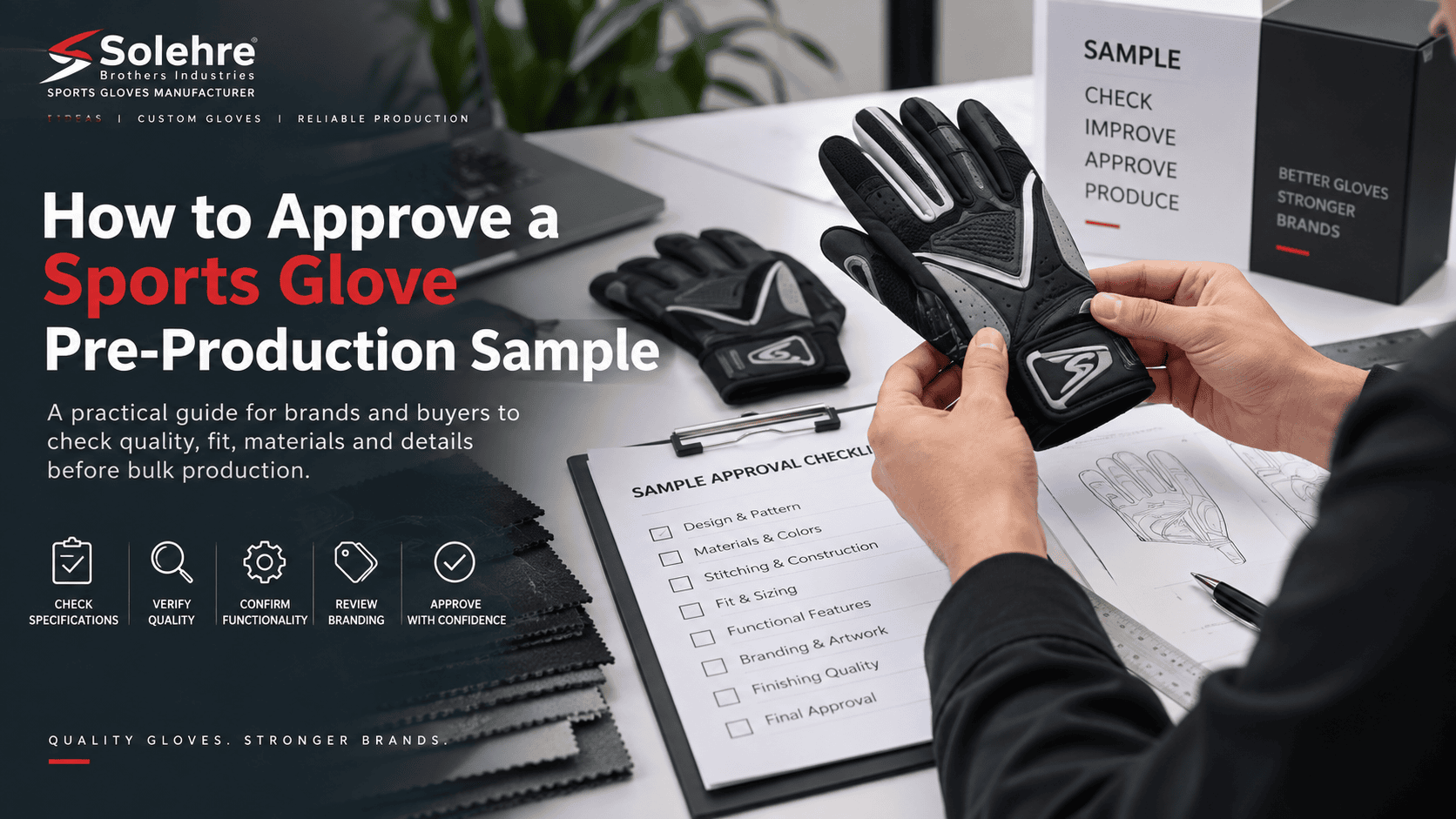
Approving a sports glove pre-production sample means confirming that the sample matches the agreed design, materials, construction, fit, branding, and quality requirements before bulk manufacturing begins.
For a sportswear brand, retailer, distributor, or private-label buyer, the approval should be based on a documented checklist rather than appearance alone. A sample can look correct while still having problems with sizing, stitching, grip materials, padding, closures, or branding placement.
The goal is simple: make sure the approved sample becomes the correct production reference before the bulk order is started.
A pre-production sample is a physical glove made to represent the specifications agreed for bulk production.
It should be evaluated against the buyer’s approved requirements, including:
The important distinction is that sample approval is a quality and specification decision. It should not simply be treated as an opportunity to decide whether the glove “looks good.”
A practical approval process can be divided into seven stages:
The final decision should clearly identify whether the sample is approved, approved with specific corrections, or rejected for revision.
Start with the documents and information that were agreed during product development.
Do not rely on memory or verbal instructions.
Create a comparison checklist covering:
| Specification | What to Check |
|---|---|
| Design | Shape, pattern and overall appearance |
| Materials | Correct material and construction |
| Colors | Main color, accents and trims |
| Size | Measurements and grading |
| Features | Grip, padding, ventilation, closures and other specified features |
| Branding | Logo, labels and artwork |
| Construction | Panels, seams and stitching |
| Packaging | Required labels, tags and packaging instructions |
Any difference should be documented before approval.
If a change was intentionally made during development, record the updated specification so production does not continue using an outdated version.
Material approval is one of the most important parts of the sample review.
The buyer should verify that the sample uses the agreed material type and construction.
Depending on the glove, this may include leather, synthetic materials, mesh, microfiber, neoprene, Amara, stretch fabrics, foam, grip materials or other specified components.
Check:
Color should also be checked under suitable lighting. A material that appears correct under one light source can look different under another.
For branded products, the buyer should retain an approved physical or visual color reference where possible.
A good-looking sample can still reveal production problems when the construction is examined closely.
Inspect the glove panel by panel.
Look for:
Pay particular attention to areas that experience repeated movement or stress during normal use.
The purpose is not simply to count stitches. The buyer should confirm that the construction matches the approved design and provides the intended level of functionality.
Solehre describes its manufacturing quality process as including checkpoints from pattern development and cutting through stitching and final finishing.
Fit should be evaluated using the agreed size specifications rather than visual judgment alone.
If a size chart or measurement sheet was approved, measure the sample against it.
Depending on the glove design, relevant measurements may include:
Also test the glove on an appropriate hand or sizing form.
Check whether:
A sample that looks accurate but fits incorrectly should not automatically receive final approval.
The correct inspection depends on the sport and the glove design.
For example, a cycling glove may have grip printing, padding, stretch panels and sweat-management features. A different sports glove may require completely different functional criteria.
Solehre’s published cycling glove catalogue, for example, shows products using features such as Amara printed palms, stretch mesh backhands, silicone grippers, GEL foam padding and adjustable closures.
For a glove with functional features, verify each feature individually.
Check whether the grip material or printing is positioned according to the approved design and whether it provides the intended contact area.
Confirm:
Check hook-and-loop straps, elastic openings, cuffs, snaps or other closure systems for correct placement and operation.
Confirm that stretch materials are positioned correctly and allow the intended range of movement.
Where ventilation is part of the approved design, verify perforations, mesh panels or other ventilation features against the specification.
Do not approve a functional feature merely because it is present. Check whether it has been made according to the agreed specification.
For OEM and private-label sports gloves, branding errors can be just as important as construction defects.
Review every branded element.
Check:
Compare the sample against the latest approved artwork.
A common mistake is approving the physical glove while overlooking an outdated logo file or incorrect label information.
For this reason, the latest approved artwork should be clearly identified in the production documentation.
The final inspection should cover the complete glove rather than individual components only.
Look for:
Inspect both gloves as a pair.
The left and right gloves should have consistent:
Solehre states that its quality system includes raw-material evaluation, controlled manufacturing processes, inspections and final quality checkpoints.
A verbal “looks good” is not enough for a commercial production order.
The approval record should identify the exact version being approved.
A useful approval record can include:
| Approval Item | Record |
|---|---|
| Product Name | Exact product name/code |
| Sample Version | Sample revision/version |
| Date | Approval date |
| Size | Sample size |
| Materials | Approved materials |
| Colors | Approved colors |
| Branding | Approved artwork/version |
| Measurements | Approved measurement reference |
| Features | Confirmed features |
| Corrections | Outstanding changes |
| Final Status | Approved / Revision Required / Rejected |
| Buyer Approval | Name and confirmation |
This creates a clear reference for communication between the buyer and manufacturer.
These terms should not be confused.
An approved pre-production sample establishes what the bulk product is supposed to be.
A production sample may be taken from actual bulk production to confirm that manufacturing is following the approved specification.
The two stages serve different purposes.
| Stage | Main Purpose |
|---|---|
| Development Sample | Develop and refine the product |
| Pre-Production Sample | Confirm the final specification before bulk production |
| Production | Manufacture the approved product |
| Production Inspection | Verify finished production against requirements |
For a B2B buyer, keeping the approved sample or a clearly documented reference is important because it provides a physical or documented benchmark for later quality discussions.
Do not approve a sample simply because the production schedule is approaching.
Instead, create a correction list.
Be specific.
Instead of writing:
“Please improve the glove.”
Write:
Specific corrections reduce the chance of misunderstanding.
If multiple changes are required, request a revised sample or obtain written confirmation that the manufacturer will implement the corrections before bulk production.
No.
Appearance is only one part of the approval process.
A sports glove should be reviewed across design, materials, construction, fit, functionality, branding and finishing.
A glove can have attractive colors and graphics while still having incorrect measurements, poorly positioned seams or missing functional features.
For B2B purchasing, the approval decision should therefore be based on the complete specification rather than visual appearance alone.
Before giving final approval, confirm:
Before approving a sample, buyers should make sure the manufacturer understands:
These questions help turn a sample from a visual reference into a clear production standard.
For brands sourcing sports gloves, the appropriate manufacturing route depends on the product requirements, branding needs and development stage.
Solehre Brothers Industries presents itself as a sports glove manufacturer and provides manufacturing and quality-control information relevant to B2B buyers. Its published quality information states that the company operates an ISO 9001:2015-certified Quality Management System and describes quality controls covering materials, production processes and final inspection.
For buyers evaluating a potential supplier, the useful next step is to provide the manufacturer with the product specifications, artwork, sizing requirements, material requirements and intended application so the sample can be evaluated against a defined brief.
A sports glove pre-production sample should be approved only after the buyer has checked design, materials, construction, fit, functionality, branding and finishing against the agreed specification.
The strongest approval process is documented, specific and measurable. If something needs to change, record the correction before bulk production rather than relying on verbal instructions.
For brands developing or sourcing custom sports gloves, a clearly approved sample gives both the buyer and manufacturer a much stronger reference for moving into production.
There is no single inspection point that is sufficient on its own. The sample should be checked against the complete specification, including materials, measurements, construction, features, branding and finishing.
If the logo is the only outstanding issue, document the required artwork correction clearly and confirm that the corrected branding will be implemented before bulk production. Do not treat an unapproved logo as final approval.
Compare the physical sample with the approved measurement specifications and test it on an appropriate hand or sizing reference. Check finger length, palm width, thumb movement, cuff fit and overall comfort.
Create a detailed correction list and identify each issue by location and required change. Depending on the significance of the defects, request a revised sample before approving bulk production.
Written approval creates a clear reference for the buyer and manufacturer. It reduces ambiguity about which design, materials, measurements, artwork and features were approved for production.
Not necessarily. A sample can establish the design and construction, but buyers should also verify the approved size specifications and grading requirements for the complete size range.
The production should be evaluated against the final approved specifications and sample reference, including materials, construction, measurements, features, branding and finishing.
No. Sample approval establishes the intended production standard. Quality inspection evaluates whether manufactured goods conform to that standard.

